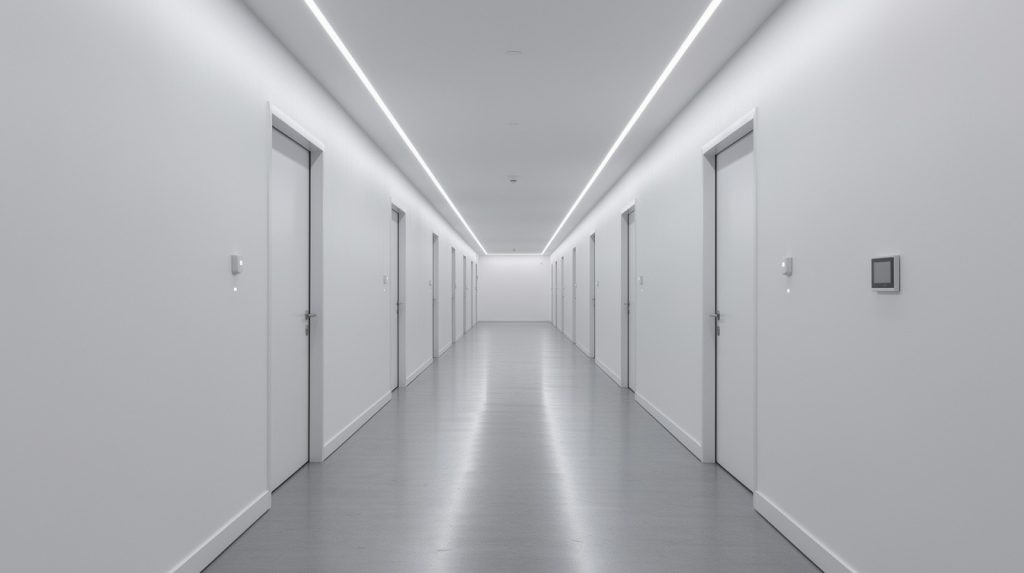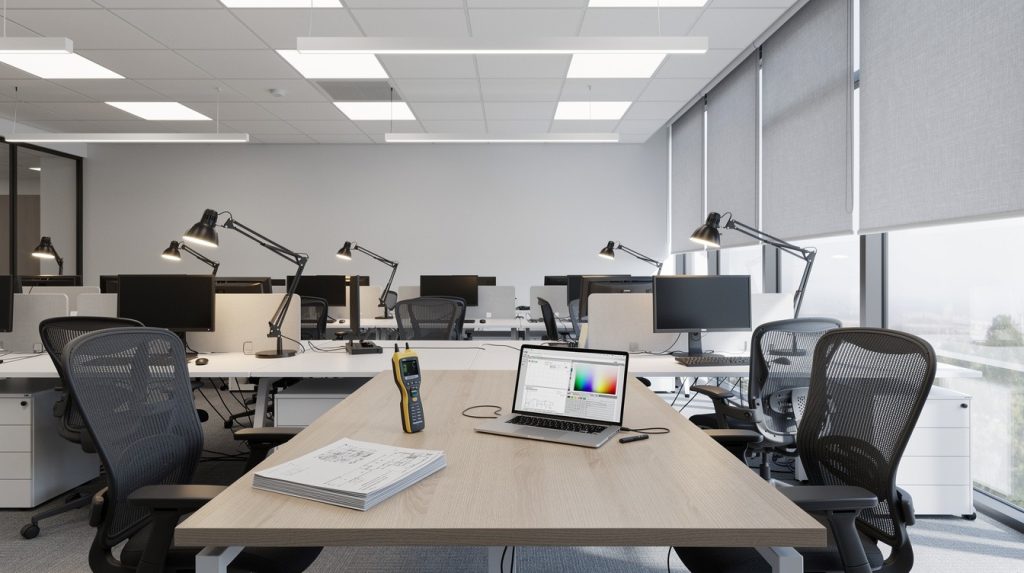
Hallways are often overlooked in building design, yet they consume significant energy and directly affect how people move through your space. Poor corridor lighting wastes money, creates safety risks, and impacts how employees feel at work.
At OpenLumen, we’ve seen firsthand how the right corridor lighting tips transform both energy bills and user experience. This guide covers what actually works for efficient hallways in any building type.
Why Corridor Lighting Costs More Than It Should
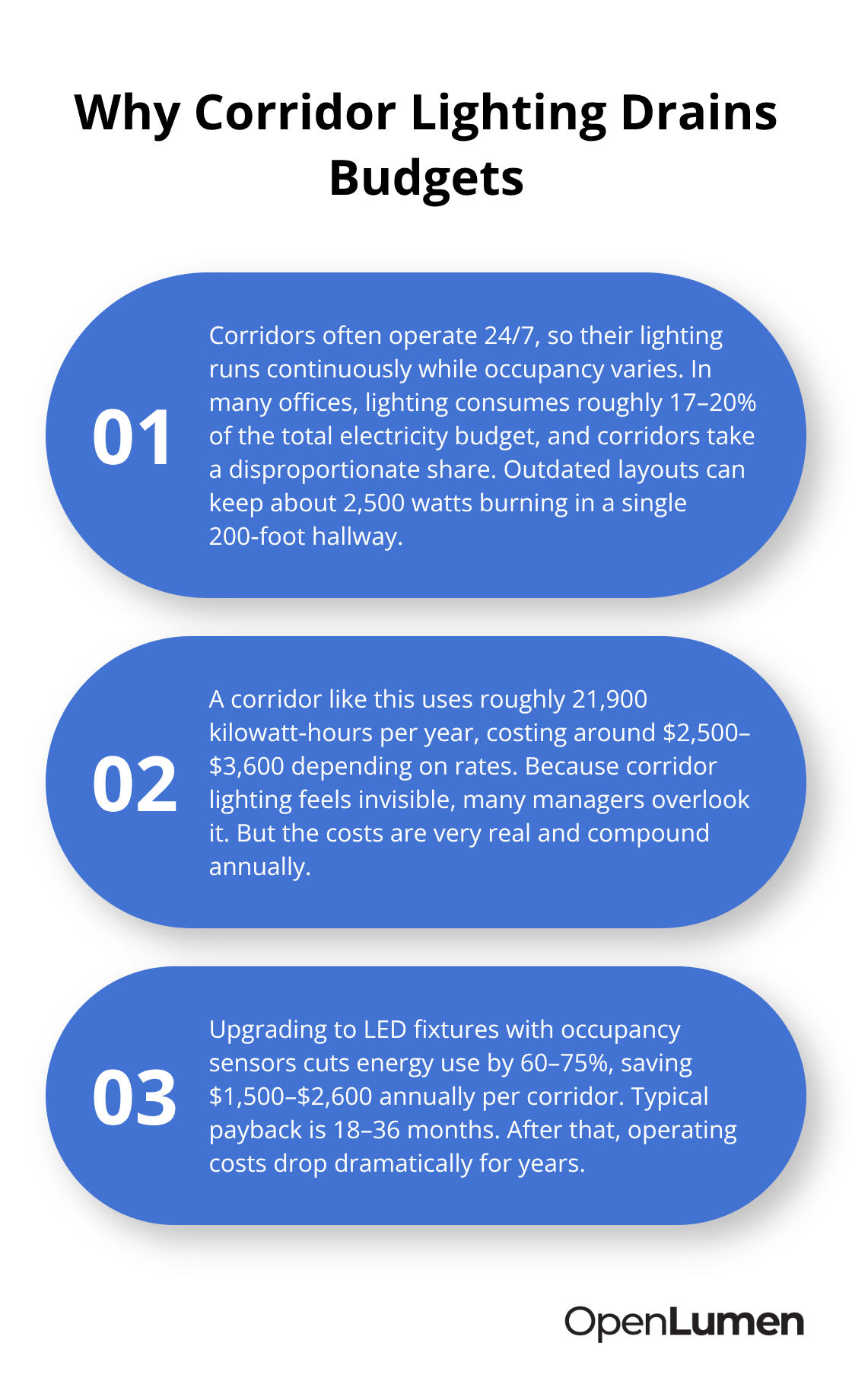
Corridors run 24/7 in most commercial buildings, making them one of the largest energy drains you probably aren’t tracking. Office buildings spend roughly 17–20% of their total electricity budget on lighting, and corridors account for a disproportionate share because they stay lit continuously regardless of occupancy. A 200-foot hallway with outdated fluorescent fixtures consuming 100 watts per fixture, spaced every 8 feet, burns through approximately 2,500 watts constantly. Over a year, that’s roughly 21,900 kilowatt-hours per corridor-costing between $2,500 and $3,600 depending on your local electricity rates. Most facility managers never calculate this because corridor lighting feels invisible. It isn’t. Switching to LED fixtures with occupancy sensors cuts that energy use by 60–75%, saving $1,500–$2,600 annually per corridor. The payback period typically runs 18–36 months, after which you operate nearly for free.
Safety Directly Connects to Light Levels
Corridors function as means of egress, which means inadequate lighting creates liability. Building codes require minimum illumination, but most buildings meet only the bare minimum of 3 footcandles (30 lux) instead of the 10–20 footcandles recommended for safe navigation. At 3 footcandles, people move slower, trip risks increase, and wayfinding becomes difficult during power disruptions. Hospitals and senior care facilities learned this the hard way-facilities that upgraded to 20 footcandles saw slip-and-fall incidents drop by 30–40% according to multiple safety studies. Color temperature matters equally. Neutral white light at 3500–4000K improves visibility and makes hazards visible faster than warm 2700K lighting. In commercial corridors, this difference translates to measurable safety gains because people identify obstacles, stairs, and changes in floor level more quickly. Emergency lighting must also work independently-many buildings fail because they wire exit lights to the same circuit as ambient lighting, creating total darkness if one circuit fails.
Productivity and Building Perception Depend on Lighting Quality
Poor corridor lighting signals poor building maintenance to tenants and visitors. Studies from the Lighting Research Center show that inadequate hallway lighting creates psychological discomfort, making spaces feel cramped and neglected even when they’re clean. Employees in buildings with well-lit corridors report higher satisfaction scores and spend less mental energy navigating spaces. For office buildings, this matters for lease renewal rates. Prospective tenants tour hallways first-dim, flickering corridors cost you renewals. In retail and hospitality settings, corridor lighting directly impacts perceived quality and safety. Hotels with dim hallways see higher guest complaints and lower online ratings regardless of room quality. The cost to upgrade typically runs $150–$300 per fixture for quality LED semi-flush mounts or wall sconces with proper spacing, but the return comes through occupancy rates and reduced turnover. Adding dimming controls lets you adjust light levels throughout the day, reducing 4000K brightness during evening hours while maintaining safety-this approach cuts energy use another 20–30% without compromising navigation.
Design Choices Shape Long-Term Performance
The fixtures you select determine whether your corridor lighting investment pays off or drains your budget for years. Quality LED fixtures last 50,000+ hours compared to 10,000–20,000 hours for fluorescent tubes, which means you replace them far less often and reduce maintenance labor costs. Spacing fixtures 6–8 feet apart prevents dark spots and ensures even illumination across the full corridor width. Wall sconces paired with ceiling fixtures create layered lighting that improves visibility while reducing the flat, clinical appearance that cheap single-source lighting produces. Neutral finishes like brushed nickel and bronze coordinate with hardware and hide dust better than chrome or polished brass. Your next step involves assessing your current corridor layout and light levels to identify where upgrades deliver the fastest payback.
How to Set Light Levels and Spacing That Actually Work
Match Brightness to How People Use the Space
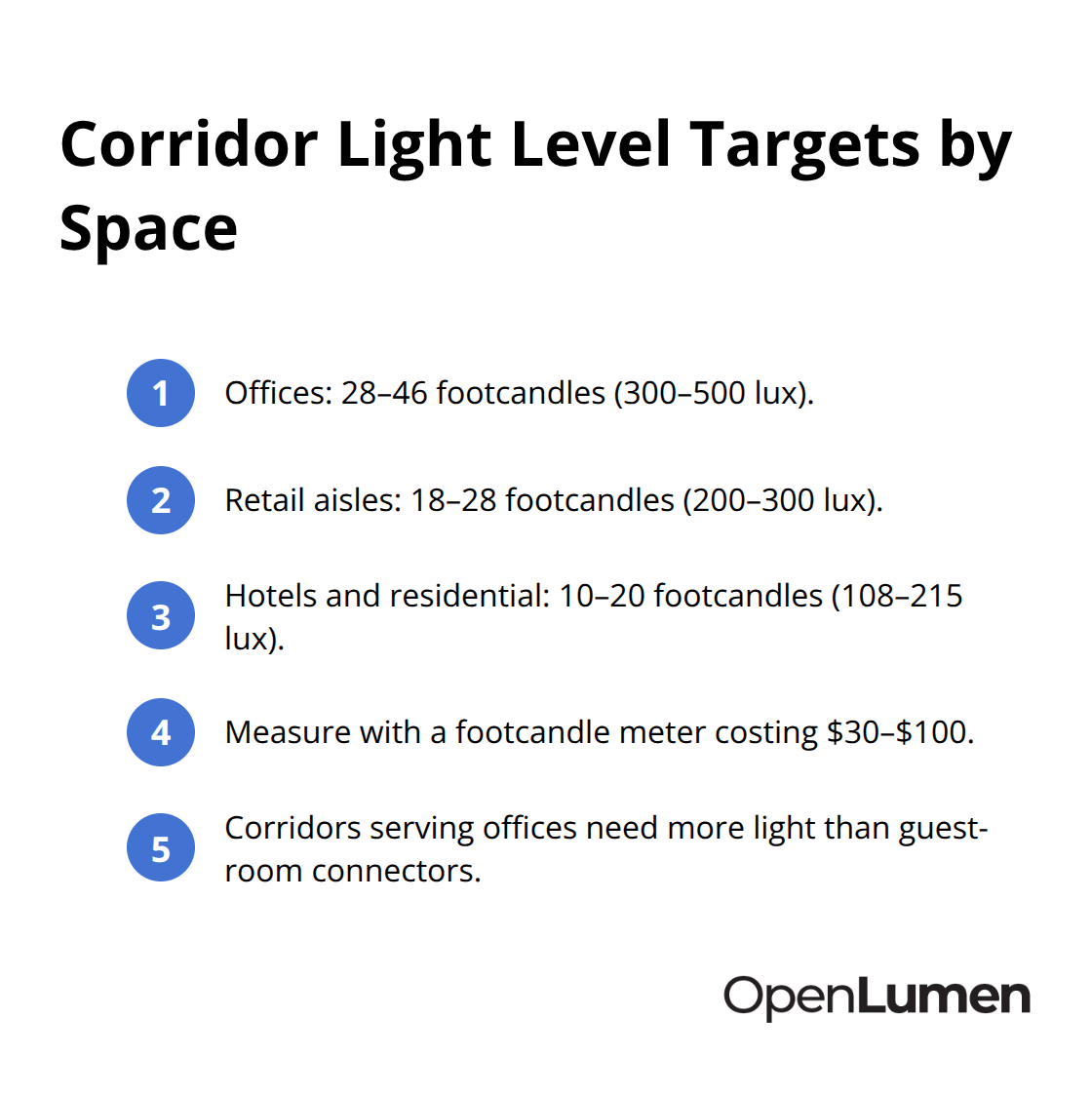
Corridor light levels must match the space’s actual function, not arbitrary standards. Commercial office corridors need 28–46 footcandles (300–500 lux) to support safe navigation and wayfinding, while retail aisles function well at 18–28 footcandles (200–300 lux). Residential hallways and hotel corridors operate effectively at 10–20 footcandles (108–215 lux), which feels welcoming without wasting energy on unnecessary brightness. Most facility managers install uniform brightness throughout their buildings-this approach either over-lights some spaces or under-lights others. Instead, measure your current light levels with a basic footcandle meter (available for $30–$100) and compare them to the space’s actual function. A corridor leading to offices needs more light than one connecting guest rooms.
Choose Color Temperature Based on Building Type and Time of Day
Once you establish your target brightness, color temperature becomes your next decision. Neutral white at 3500–4000K works best in commercial corridors because it improves hazard visibility and supports circadian rhythm regulation for employees spending 8+ hours indoors. Warmer 2700–3000K light suits hotels and residential settings because it feels less institutional. Cool light above 5000K belongs nowhere in corridors-it drains energy, creates eye strain, and makes people uncomfortable. Smart controls through apps or voice commands let facility teams adjust brightness schedules seasonally, reducing 4000K output during evening hours while maintaining safety.
Space Fixtures to Eliminate Dark Zones
Spacing fixtures 6–8 feet apart prevents dark zones while keeping energy costs reasonable; closer spacing in narrow corridors (under 6 feet wide) ensures even wall illumination, while wider hallways tolerate 8-foot spacing. Install fixtures at consistent heights-wall sconces at 5–6 feet and ceiling-mounted units at appropriate clearance heights-to create visual rhythm and predictable lighting patterns that guide movement naturally. This consistency helps people navigate without conscious effort.
Select Fixtures That Perform for 10+ Years
LED semi-flush mounts rated DLC Premium or ENERGY STAR deliver proven efficiency and qualify for utility rebates in most regions, cutting your effective cost by 20–30%. Recessed downlights work on hard ceilings and create a clean appearance, while flat panel troffers suit drop ceilings and distribute light evenly without glare. Wall sconces layer ambient light and add wayfinding value by illuminating walls and reducing shadows-pair them with ceiling fixtures rather than using either alone. Suspended linear fixtures excel in long corridors because they create continuous visual lines that psychologically extend the space and simplify maintenance since you replace entire units rather than individual bulbs. Avoid cheap plastic housings that yellow over time; specify metal and glass fixtures with tarnish-resistant finishes in bronze, brushed nickel, or black. High color rendering (CRI above 80) ensures colors appear natural and hazards stand out visually.
Reduce Energy Consumption with Sensors and Smart Controls
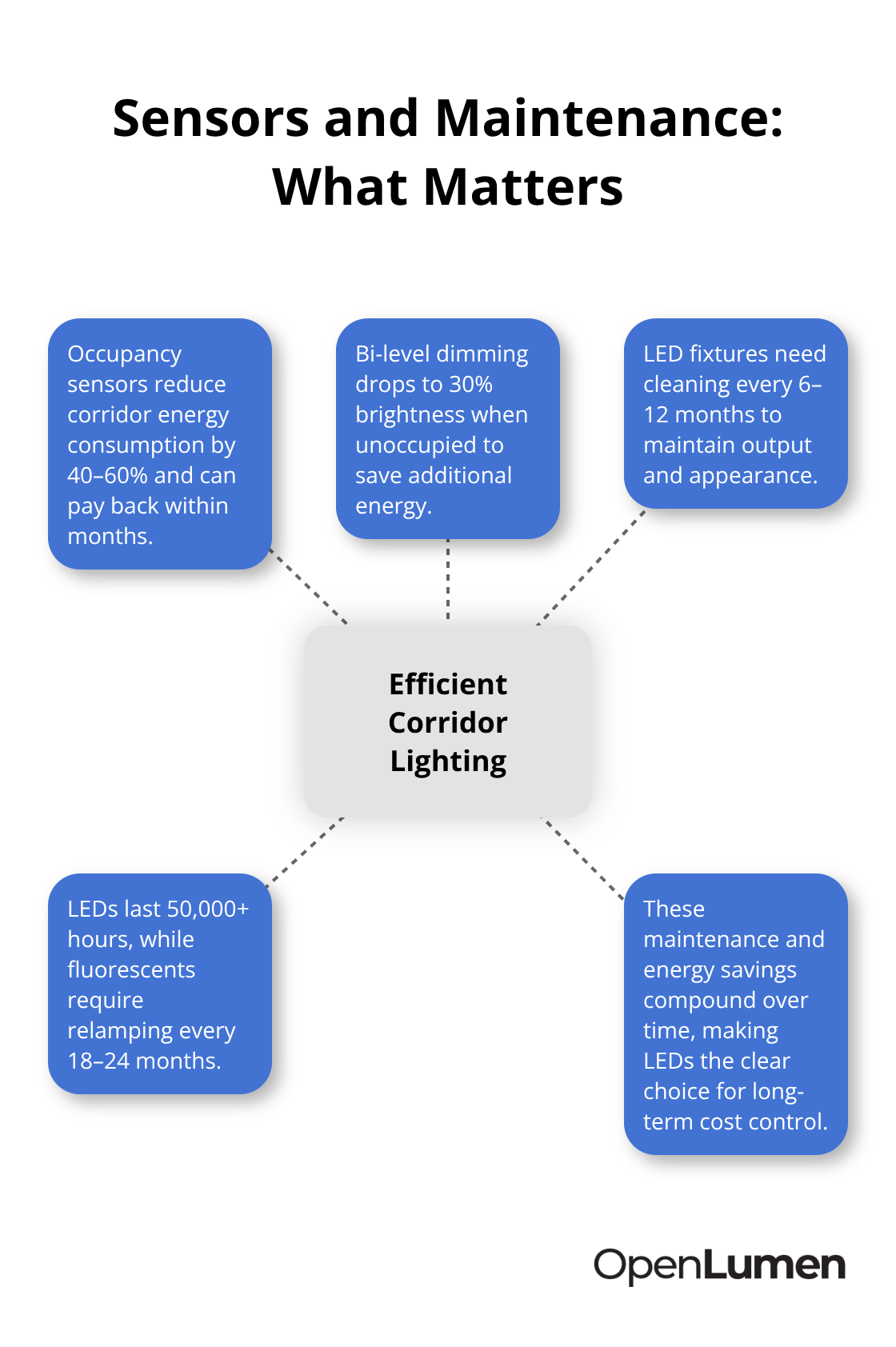
Add occupancy sensors to reduce energy consumption by 40–60% in corridors with variable traffic-bi-level dimming (dropping to 30% brightness when unoccupied) costs $15–$40 per sensor and pays back within months. LED fixtures need cleaning every 6–12 months and last 50,000+ hours before dimming noticeably, while fluorescent tubes require replacement every 18–24 months and cost more in labor than materials. This maintenance difference compounds over time, making LED the clear choice for long-term cost control. The next step involves selecting specific fixture types and layouts that match your building’s architectural style and occupancy patterns.
Common Corridor Lighting Mistakes to Avoid
Most facilities install uniform brightness across all corridors regardless of actual function. A 200-foot office hallway lit to 500 lux costs roughly $3,600 annually to operate, but if that same corridor only needs 300 lux for safe navigation, you waste $1,200 per year on unnecessary brightness. Overlighting also creates glare on reflective floors and walls, which paradoxically reduces visibility and increases perceived discomfort.
The solution requires measuring your actual light levels with a basic footcandle meter ($30–$100), then adjusting fixture output or spacing to match the space’s real requirements. Office corridors typically need 28–46 footcandles, while hotel hallways function perfectly at 10–20 footcandles. Facility managers who skip this step install fixtures sized for maximum brightness, then complain about energy costs they created themselves.
Occupancy sensors solve part of this problem by dropping corridor lighting to 30% brightness during low-traffic periods, cutting energy consumption by 40–60% without compromising safety. However, sensors fail if you don’t pair them with appropriate base brightness levels. A corridor lit to 1000 lux with sensors dropping to 300 lux still wastes energy compared to one designed for 300 lux from the start.
Cheap Fixtures Cost More Over Time Than Quality Ones
Plastic-housed fixtures yellow within 3–5 years and develop cracks that admit dust and moisture, requiring replacement decades before their rated lifespan ends. Metal fixtures with brushed nickel or bronze finishes maintain appearance for 15+ years and cost roughly $40–$80 more upfront per unit. That additional cost disappears when you factor in replacement labor.
A facility managing 20 corridors with 100 fixtures each faces either replacing 2,000 yellowed plastic units or maintaining 2,000 metal fixtures that still look professional. The math strongly favors quality. LED fixtures rated DLC Premium or ENERGY STAR deliver documented efficiency and qualify for utility rebates covering 20–30% of your purchase price in most regions.
Fluorescent fixtures require relamping every 18–24 months, while LEDs last 50,000+ hours before noticeably dimming. Over ten years, a single corridor might require three complete fluorescent replacements versus one LED replacement, plus the labor cost difference compounds dramatically. High color rendering index above 80 ensures colors appear natural and hazards stand out visually, reducing liability exposure.
Building Codes Exist Because People Got Hurt
Corridor lighting falls under means of egress requirements, which vary by jurisdiction but universally mandate minimum illumination for safe evacuation. Many buildings meet only the 3 footcandle minimum required by code while ignoring the 10–20 footcandle recommendation for actual safe navigation. The distinction matters because 3 footcandles creates barely visible conditions during emergencies when people move quickly and panic narrows focus.
Emergency lighting must function independently on backup power, yet countless facilities wire exit lights to the same circuit as ambient lighting, creating total darkness if the main circuit fails. Your local authority having jurisdiction specifies exact requirements, and violating them creates personal liability for facility managers and building owners.
Color temperature also factors into code compliance because neutral 3500–4000K light improves hazard visibility faster than warm 2700K lighting, directly supporting the egress function. Some jurisdictions require accessible exit signage with specific brightness levels and visibility distances. Ignoring these requirements doesn’t save money-it creates legal exposure that costs far more than compliance.
Before upgrading any corridor, contact your local building department or hire a lighting designer familiar with your jurisdiction’s specific codes. The cost of compliance runs $200–$400 per corridor in most cases, while the cost of non-compliance includes potential fines, liability settlements, and forced emergency retrofits that cost 3–5 times more than planned upgrades.
Final Thoughts
Efficient corridor lighting delivers measurable returns across energy costs, safety, and building perception. The corridor lighting tips covered here-matching brightness to actual function, selecting quality LED fixtures, spacing them properly, and adding occupancy sensors-reduce energy consumption by 60–75% while improving safety and tenant satisfaction simultaneously. Most facility managers overlook corridors because they seem invisible, yet a single 200-foot hallway can waste $1,500–$2,600 annually through poor design choices.
Start by measuring your current light levels with a basic footcandle meter and comparing them to your corridor’s actual function. Office hallways need 28–46 footcandles, while hotels and residential spaces function well at 10–20 footcandles. Overlighting wastes money; underlighting creates liability. Next, audit your fixture quality and spacing to eliminate dark zones without excess brightness. Verify your local building codes for means of egress requirements and emergency lighting standards before purchasing, as compliance costs $200–$400 per corridor but prevents fines and liability exposure that cost far more.
OpenLumen simplifies the design process by letting you create photometric layouts, run real-time illuminance analysis, and generate professional reports without expensive software. This approach helps you validate designs before installation, reducing costly mistakes and accelerating your project timeline. Switching to LEDs with sensors recovers your investment within 18–36 months, then operates nearly free for a decade.
The information provided is for general educational purposes only and should not be considered professional engineering or lighting design advice. Always verify project requirements, local codes, and specifications with qualified professionals before making final decisions.