Lighting design teams waste hours every week switching between disconnected tools, waiting for feedback, and fixing miscommunication errors. When your team can’t collaborate in real time, projects stall and costs climb.
At OpenLumen, we’ve seen firsthand how collaborative lighting design workflows transform project timelines. The right platform eliminates bottlenecks and gets your team aligned from concept to completion.
What’s Really Costing Your Lighting Projects Time
Fragmented Tools Create Information Chaos
Lighting design teams operate in fragmented ecosystems where designers work in one tool, contractors estimate in another, and clients review static PDFs that become outdated within hours. A designer finishes a photometric layout in specialized CAD software, exports it as an image, emails it to the contractor, who manually inputs dimensions into estimation software, then sends a quote back via email. Three days later, the client requests a small adjustment-the fixture moves six feet-and the entire chain repeats. This isn’t inefficiency; it’s systemic waste built into how teams communicate.
When tools don’t talk to each other, information gets lost, duplicated, or misinterpreted. A contractor might work from yesterday’s design while the designer uploaded a revision an hour ago. The client sees a rendering that doesn’t match the final specification document. These gaps create rework cycles that stretch timelines by weeks and inflate costs without adding value.
Approval Cycles Multiply Delays
The real cost emerges in approval cycles. A typical lighting project requires sign-offs from architects, electrical engineers, facility managers, and sometimes code officials. Each review happens in isolation. One stakeholder approves the layout but questions the color temperature. Another approves the lumens but flags glare concerns. Instead of addressing all feedback in one coordinated session, designers respond to each review separately, making incremental changes and resubmitting.
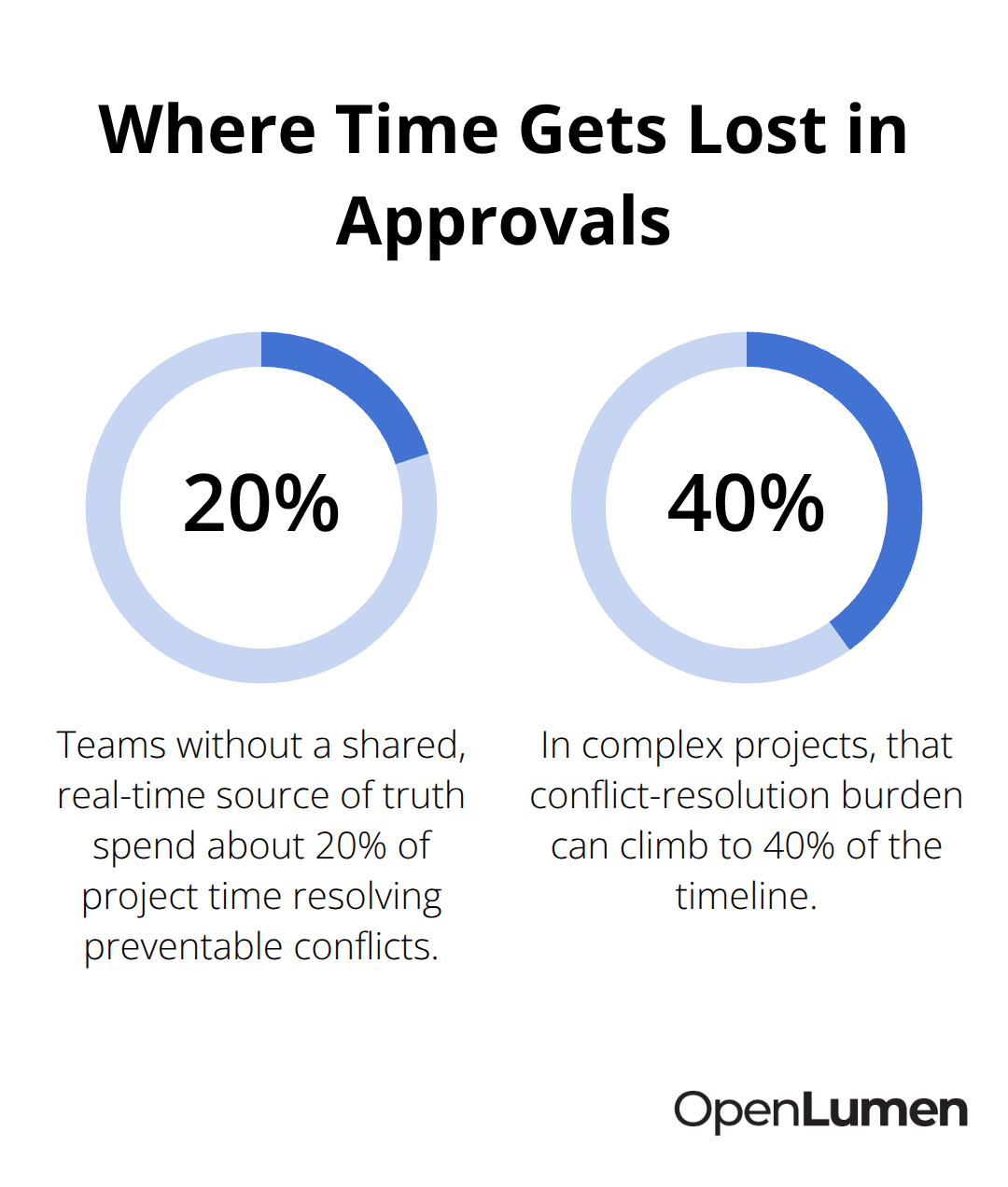
This serial approval process can add 15 to 30 days to a project timeline for complex installations. Teams that operate without a shared, real-time source of truth spend 20 to 40 percent of project time resolving conflicts that a collaborative platform would prevent entirely.
Miscommunication Compounds Rework
Miscommunication compounds the damage at every stage. A contractor assumes fixtures will mount at 12 feet when the designer specified 14 feet. A facility owner requests warm white lighting for a retail space without clarifying whether that means 2700K or 3000K. A distributor quotes fixtures that differ from the photometric data the design was based on. These misalignments force rework late in the project when changes become expensive and schedules tighten.
The solution isn’t buying more software-it’s eliminating the handoff culture that makes separate tools necessary in the first place. Collaborative platforms that unify design, estimation, and client feedback in one space address the root problem. When your team accesses the same data simultaneously, approvals accelerate, miscommunication drops, and projects move forward without the delays that plague traditional workflows.
How Collaborative Platforms Transform Design Speed
Real-Time Visibility Accelerates Approvals
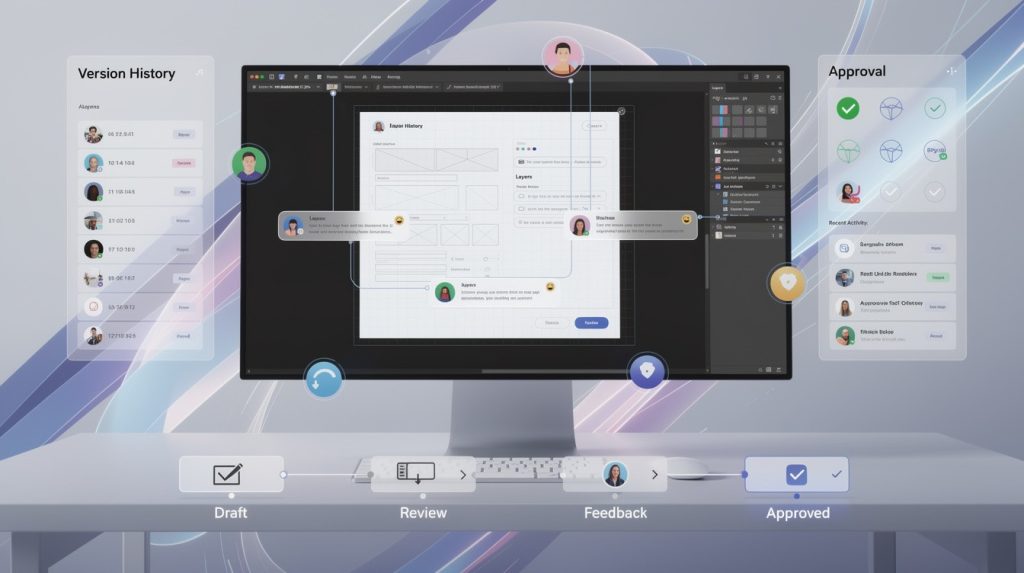
Collaborative platforms eliminate the serial approval cycle that traditional workflows enforce. Instead of emailing revisions and waiting days for feedback, your entire team-designers, contractors, facility managers, and clients-works from the same live data source. When a designer adjusts a fixture position, everyone sees that change instantly. A contractor can immediately verify the adjustment fits the installation constraints. A facility owner can assess how the change affects light distribution without waiting for a new rendering. This simultaneity cuts approval timelines from weeks to days because feedback happens in parallel, not sequentially.
Real-time visibility also prevents the miscommunication that forces rework. A contractor no longer guesses at fixture specifications because they read directly from the design platform, not an email attachment from three days ago. A facility owner requesting warm white lighting can see exactly what 2700K versus 3000K looks like in the actual space before approving, eliminating the back-and-forth that plagues traditional handoffs.
Unified Documentation Removes Iteration Friction
Speed in design iteration accelerates when your team accesses unified documentation-photometric data, specifications, mounting details, and client feedback-all in one place. A designer tests different fixture layouts without exporting files, emailing them separately, and consolidating responses. Instead, they adjust the layout in the platform, run illuminance analysis, and instantly see whether the design meets code requirements and client preferences.
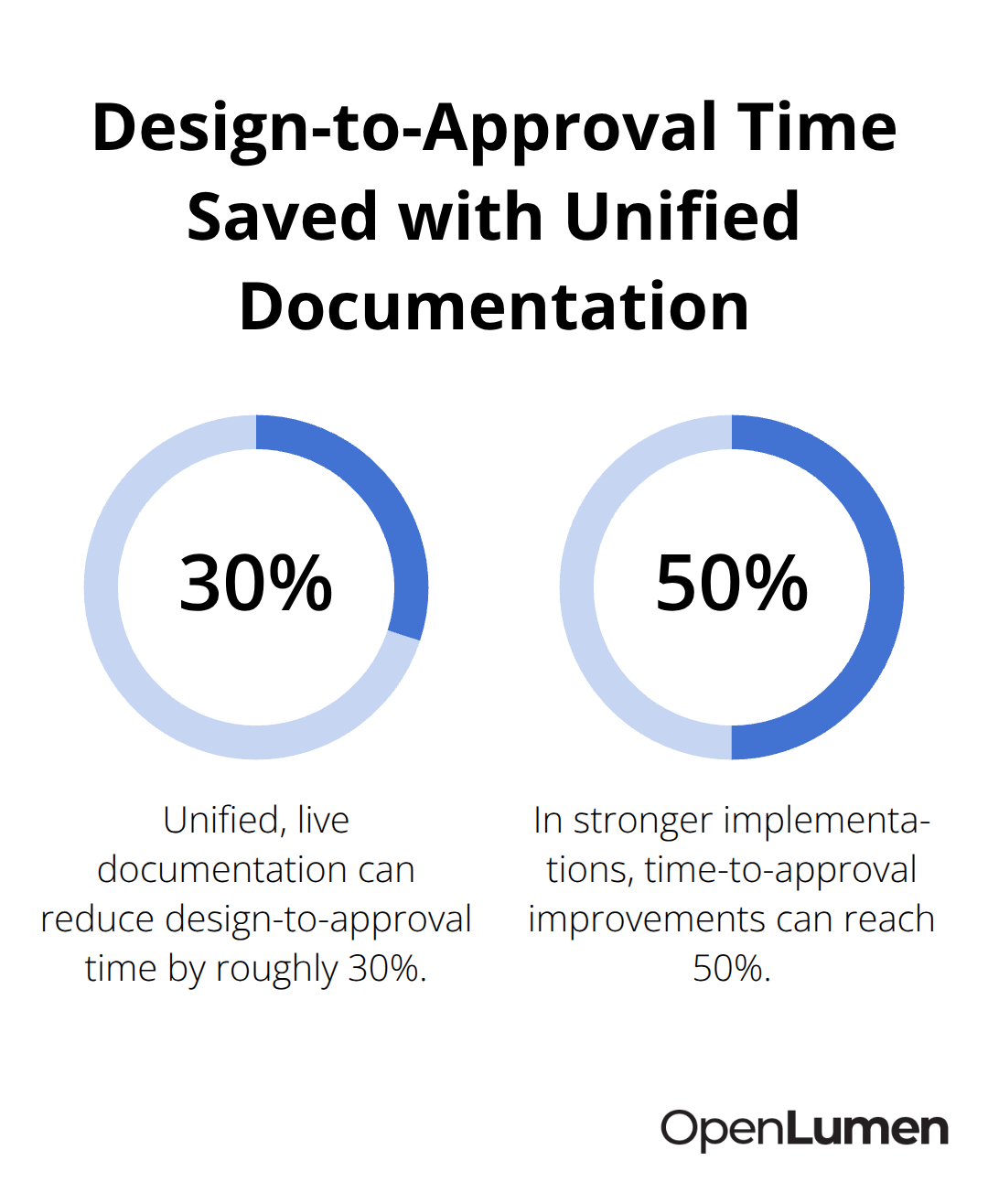
Professional reports generate automatically from the live design data, so no manual compilation step introduces errors or delays. Contractors pull accurate specifications directly into their estimation systems, eliminating data re-entry. Facility owners access interactive photometric visualizations rather than static PDFs, reducing the questions that derail approvals. This unified approach cuts design-to-approval time by 30 to 50 percent compared to fragmented workflows because every stakeholder operates from current, verified information rather than outdated files and competing versions of the truth.
Specification Accuracy Prevents Installation Conflicts
When teams work from a single source of truth, specification errors that typically surface during installation disappear before they become costly problems. A contractor no longer interprets mounting heights from a PDF annotation; they read the exact specification from the live design. A distributor no longer quotes fixtures based on a photometric summary; they access the complete luminaire data and confirm availability before the order reaches the client. A facility owner no longer discovers mid-installation that the fixture color temperature differs from what they approved; they validated the exact specification in the platform weeks earlier.
This accuracy compounds across the entire project timeline. Installation teams arrive on-site with correct fixtures, correct quantities, and correct mounting specifications-no surprises, no delays, no emergency substitutions that compromise the design intent. The next chapter explores how to select and implement the right collaborative tools for your specific team structure and project types.
Building a Collaborative Lighting Workflow That Actually Works
Implementing collaborative lighting design means selecting platforms that eliminate the handoffs slowing your team down. Start with your actual workflow, not an idealized one. Map out exactly how a project moves from concept to installation: who touches the design at each stage, what information they need, and where delays currently happen. Most teams find that approval bottlenecks occur at 2–3 specific handoff points, not everywhere. Target those spots first.
Your platform should connect designers, contractors, and facility owners in a single environment where photometric data, specifications, and client feedback live together. A browser-based platform cuts software licensing costs and reduces onboarding friction-team members access the design from any device without installing specialized CAD software. The key metric isn’t how many features a tool has; it’s how many manual handoffs it eliminates. If your team still exports files, emails revisions, and re-enters data into separate systems, the platform isn’t solving your problem.
Define What Accurate Specifications Actually Mean
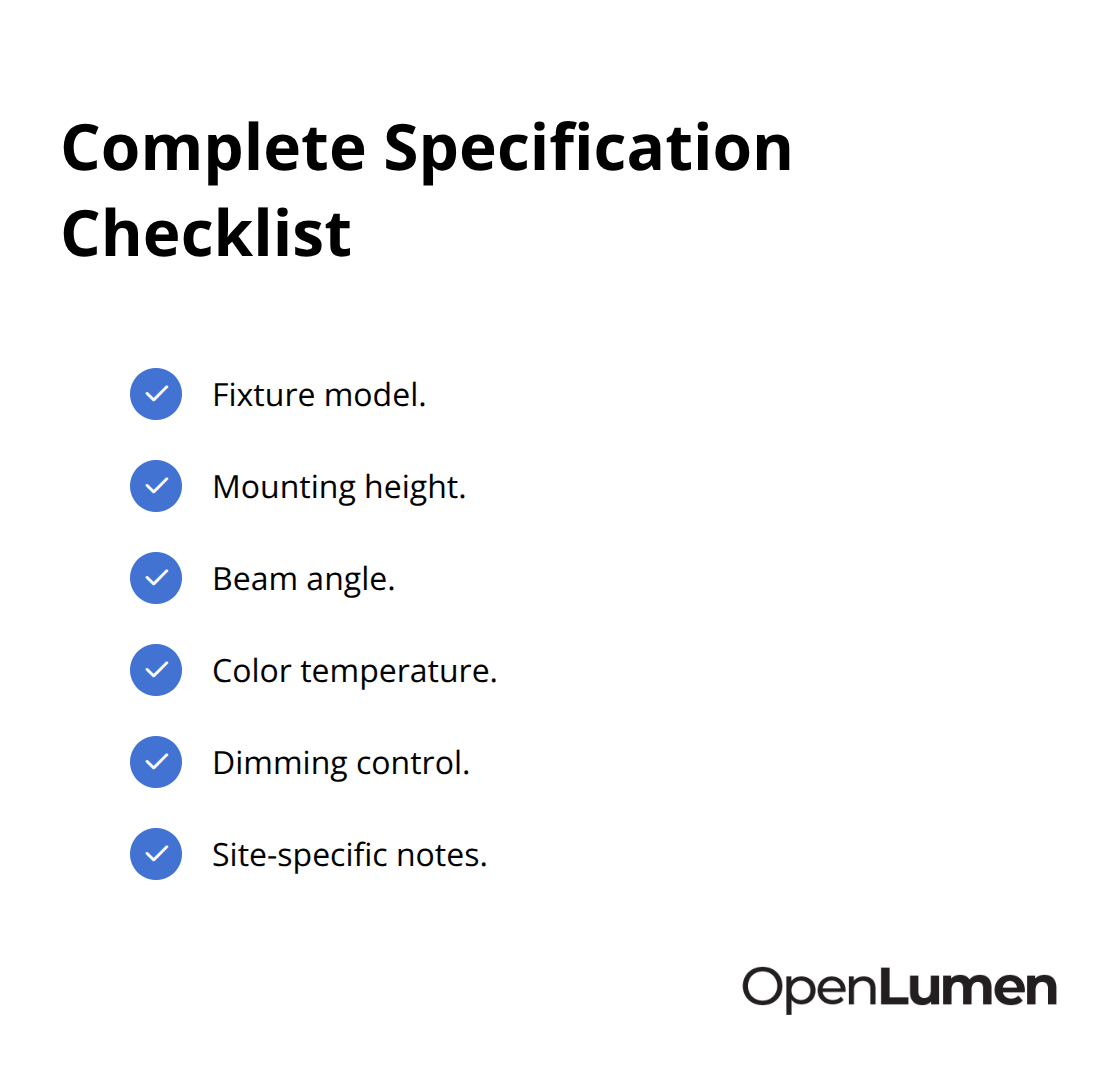
Standards prevent the miscommunication that forces rework during installation. Before adopting any platform, establish what your team means by complete specification data: fixture model, mounting height, beam angle, color temperature, dimming control, and any site-specific notes. Write these standards into a one-page reference document and require every design to include them before moving to the approval stage.
This sounds basic, but most teams skip it and end up with designers recording information one way, contractors interpreting it another way, and facility owners discovering discrepancies on installation day.
Use your platform’s automated reporting to enforce consistency-specifications should generate from the live design data, not be typed separately into a document. A contractor estimating a 50-fixture project should pull all specifications directly from the platform, not manually transcribe them from a PDF. This single practice cuts specification errors by 60–80 percent because data flows once, from design to installation, rather than being re-entered at each stage. Set a clear rule: if information isn’t in the platform, it doesn’t exist. This discipline forces your team to work inside the system rather than around it.
Train Your Team on Real Projects
Training fails when it happens in isolation from actual work. Instead of classroom sessions on tool features, train your team on their next real project. Assign a senior designer to walk through the complete workflow-from photometric layout to client approval to contractor handoff-using the actual project data. This approach surfaces how the tool fits your specific process, reveals gaps before they cause delays, and builds confidence faster than generic training.
Allocate 4–6 hours for hands-on training on a live project, not 2 hours of abstract feature walkthroughs. During this session, identify which team members need deep expertise (usually 1–2 designers or project managers) and which need basic familiarity (contractors, facility managers). Deep users should understand photometric analysis, specification generation, and approval workflows. Basic users need only to know how to access designs, provide feedback, and review professional reports. This tiered approach avoids overwhelming contractors and facility owners with features they’ll never use.
After the first project, conduct a 30-minute debrief focused on where the workflow felt clunky and what data or approvals still required email or phone calls. That feedback tells you whether your standards are clear enough and whether team members understand how to use the platform. Iterate on the workflow based on what you learn-most teams need 2–3 projects before collaborative processes feel natural and actually reduce timeline delays.
Final Thoughts
Collaborative lighting design workflows eliminate the delays that plague traditional project timelines. When your team stops exporting files and re-entering data across disconnected systems, projects move faster and errors drop dramatically. The teams closing projects on schedule work from a single source of truth where designers, contractors, and facility owners access the same information simultaneously.
The shift from serial handoffs to parallel collaboration cuts approval cycles from weeks to days. A contractor no longer waits for email attachments or guesses at specifications. A facility owner sees exactly what the design delivers before installation begins. A designer stops rebuilding the same photometric layout because someone requested a minor adjustment.
Modern platforms make this transition practical. A browser-based solution like OpenLumen lets your entire team create photometric layouts, run real-time illuminance analysis, and generate professional reports without the friction of traditional tools. Start with your biggest bottleneck, implement standards that prevent miscommunication, and train your team on a real project rather than in isolation.
The information provided is for general educational purposes only and should not be considered professional engineering or lighting design advice. Always verify project requirements, local codes, and specifications with qualified professionals before making final decisions.