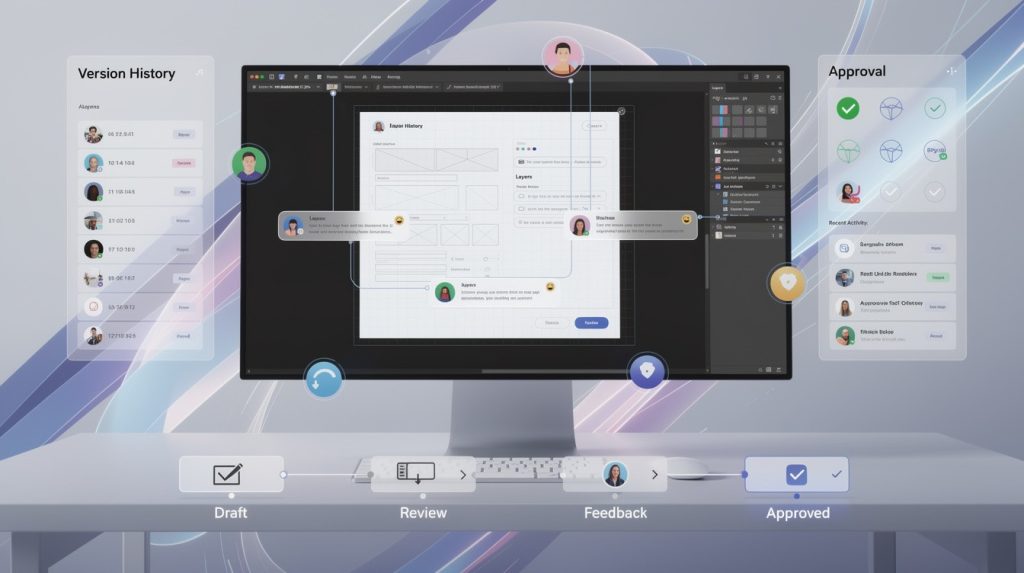
Design approvals shouldn’t take weeks. Yet most teams lose days-sometimes longer-to scattered feedback, version confusion, and waiting for stakeholders to weigh in.
At OpenLumen, we’ve seen firsthand how collaborative design workflows transform this process. When teams work in real time on shared platforms instead of trading files back and forth, approvals move faster and decisions get better.
Why Your Design Reviews Get Stuck
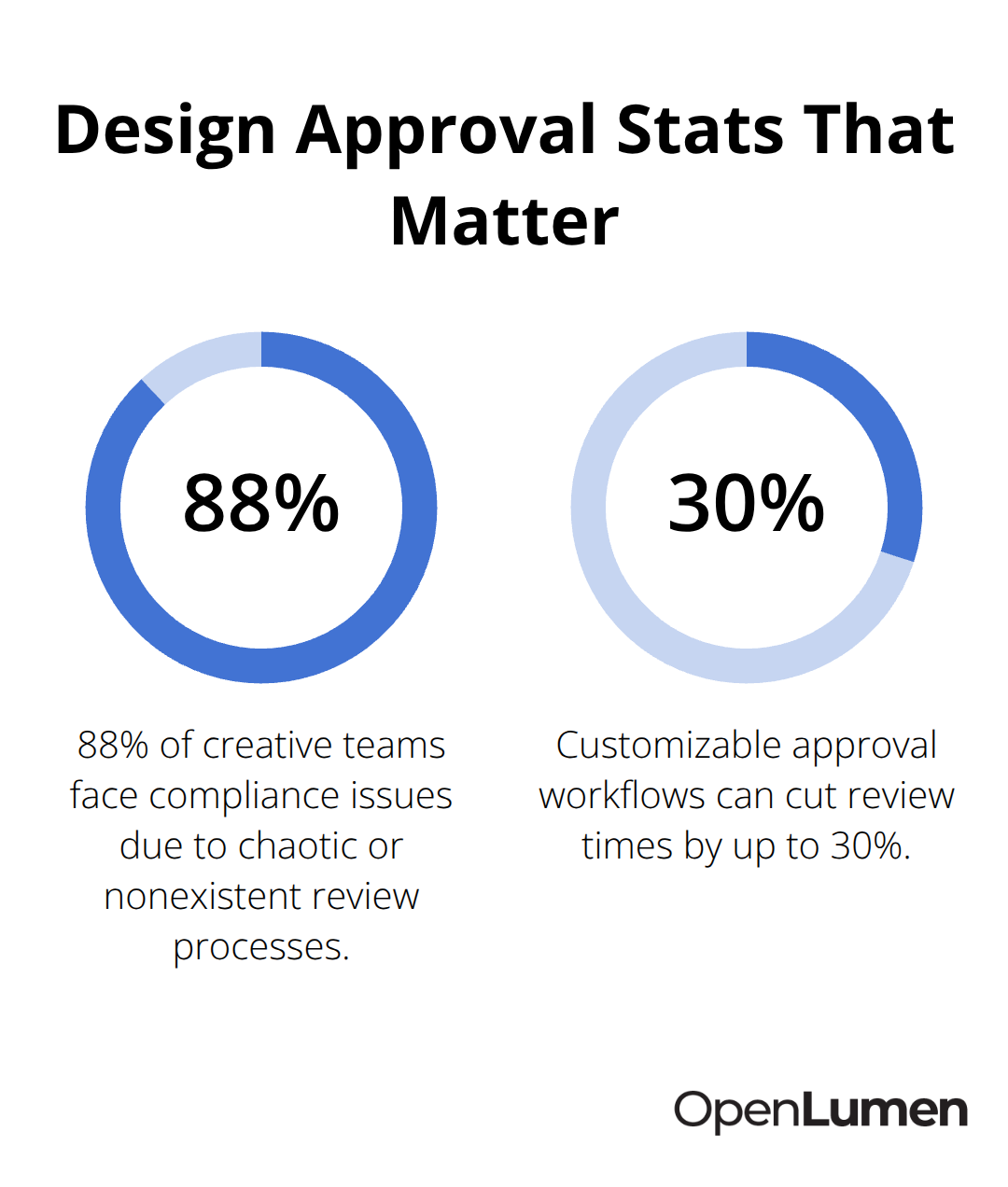
Teams waste enormous amounts of time on design approvals because their workflows lack the structure needed for speed. A 2025 study found that 88% of creative teams face compliance issues due to chaotic or nonexistent review processes. This chaos doesn’t stem from laziness-it stems from fundamental structural problems in how teams organize feedback and manage versions.
Scattered Feedback Kills Momentum
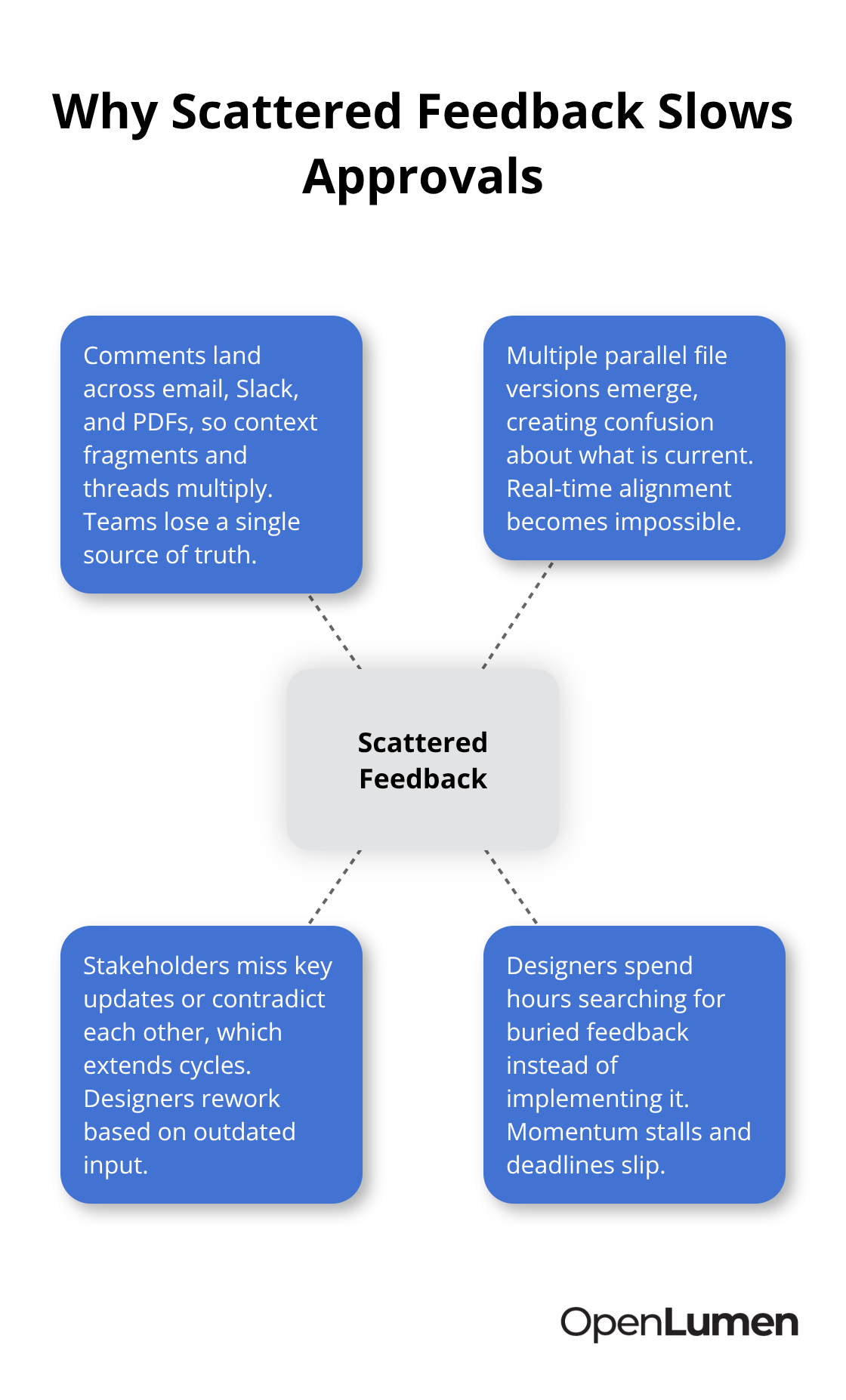
When designers finish work and email files to stakeholders, feedback scatters across inboxes, Slack threads, and email chains. One person requests a change on Tuesday, another person misses the update entirely, and by Thursday the team works on three different versions of the same design. Version control becomes a nightmare. Files get named design_v2_final_REAL_final_actualfinal, and nobody knows which one represents the current state. Stakeholders can’t access the latest version without asking for it, and designers spend hours hunting for feedback buried in old messages rather than implementing it.
Communication Gaps Create Approval Bottlenecks
The real killer is how feedback arrives. Stakeholders leave comments in email, Slack, PDFs marked up in separate programs, and sometimes during meetings where nothing gets documented. A designer finishes implementing feedback from one stakeholder, then discovers another stakeholder wanted something completely different but never said it directly. Approval cycles stretch from days into weeks because no single source of truth exists. People don’t know if their feedback was actually addressed or just ignored.
Time Zones Compound the Problem
Asynchronous teams across time zones suffer worst. Someone in London approves work at 9 PM, someone in San Francisco doesn’t see it until morning, and a developer already started building from an older version. Real-time collaboration eliminates this mess by centralizing all feedback in one place where every stakeholder sees every comment, every change, and every decision. When feedback lives where the work lives-not scattered across five different tools-approvals accelerate dramatically.
This is exactly why the next section explores the tools and platforms that make real-time collaboration possible.
Tools That Keep Feedback Where the Work Happens
Centralized Platforms Eliminate Feedback Chaos
Figma, Miro, and similar platforms centralize all comments, revisions, and decisions in one space instead of scattering them across email and Slack. When a stakeholder leaves feedback directly on a design canvas, every team member sees it instantly. The designer implements the change in real time. Other stakeholders watch it happen and either approve or request adjustments without starting a new conversation thread. This eliminates the approval bottleneck where feedback gets lost or contradicted. Teams using centralized platforms report faster sign-offs because no ambiguity exists about what was requested or whether changes were made. Real-time editing also prevents the version nightmare entirely-everyone works on the same file, so there’s no design_v2_final confusion.
Cloud-Based Access Compresses Review Cycles
Cloud-based access matters more than most teams realize. When stakeholders open a design from their phone, tablet, or laptop without downloading anything, approval cycles compress dramatically. A client in a meeting can review work on their phone and leave feedback immediately instead of waiting to get back to their desk. Developers can inspect design specs without requesting exports.
Over 60% of global teams operate remotely at least part-time, which makes this accessibility non-negotiable. Streaming large design files instantly eliminates download delays and enables reviews from anywhere.
Automation Routes Feedback to the Right People
Automated notifications and task assignments push approvals further. When someone marks a design as ready for review, the right stakeholders receive notifications automatically instead of waiting for a calendar invite or an email. Reminders escalate stalled approvals before deadlines slip. Integration with Slack, Jira, and GitHub routes feedback directly into the tools teams already use daily, eliminating context switching. The result isn’t just faster approvals; it’s fewer meetings, clearer decisions, and designers spending time on creative work instead of chasing stakeholders for feedback.
These tools form the foundation of speed, but implementation matters just as much as the platform itself. The next section covers how to structure your approval process so these tools actually deliver the results you expect.
How to Structure Approvals That Actually Work
Define Clear Approval Hierarchies
The right tools mean nothing without a system behind them. Teams that implement collaborative workflows without defining who approves what, when, and how end up with faster chaos instead of faster approvals. The structure matters more than the platform.
Start with explicit approval hierarchies that name the final decision-maker for each type of design decision. A marketing campaign needs sign-off from the brand manager, not the entire team. A client deliverable needs client approval, not internal consensus. When multiple people can block a decision, approvals stall.
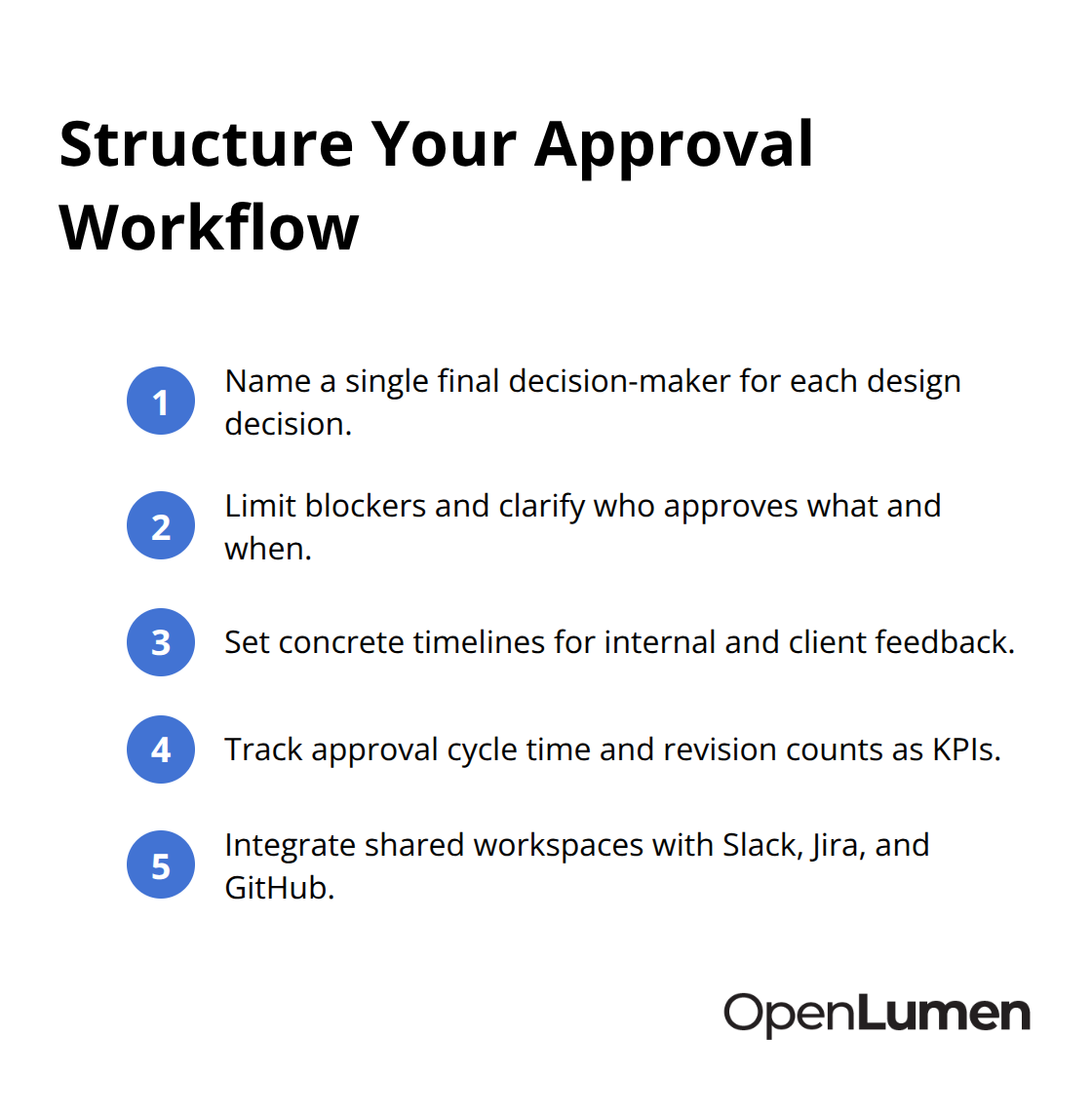
Customizable approval workflows cut review times by up to 30%, and that speed comes directly from clarity about authority. Set timelines alongside hierarchies. A design review should have a deadline, not a vague expectation that feedback arrives when people feel like giving it. Two business days for internal feedback, three business days for client feedback-concrete timelines force decisions and prevent designs from sitting in limbo.
Track Approval Metrics to Spot Bottlenecks
Teams that track approval cycle time as a KPI identify bottlenecks faster than teams that ignore the data. Measure how long feedback takes at each stage, which stakeholder causes delays, and where designs get stuck. That data reveals whether your bottleneck is a person, a process, or simply a tool that doesn’t integrate with your workflow.
Analytics dashboards in your collaboration platform show approval velocity, revision counts, and which projects consistently miss deadlines. Use this data to adjust timelines, reassign workload, or identify whether a particular stakeholder consistently requests excessive revisions. Some teams discover that one person’s feedback rounds multiply revision cycles by three; others learn that their timeline estimates systematically underestimate complexity. Neither insight matters without measurement.
Centralize Work in Shared Digital Workspaces
Shared digital workspaces eliminate the false choice between centralizing work and maintaining security. Every stakeholder needs access to the current version from the moment a design enters review, not after someone manually uploads it to a shared drive. Real-time cloud collaboration means a developer can inspect design specs while a marketer leaves feedback while a client watches both happen simultaneously. This transparency accelerates decisions because nobody waits for status updates.
Integrate these workspaces directly into the tools teams use daily-Slack for notifications, Jira for task tracking, GitHub for development handoff. When feedback appears where work happens instead of in a separate tab, context switching vanishes and approvals move forward without friction. The teams that move fastest measure everything about their approval process and treat those metrics as seriously as they treat project deadlines.
Final Thoughts
Collaborative design workflows eliminate the approval delays that plague most teams. When feedback lives where work happens instead of scattered across email and Slack, decisions move faster and stakeholders stay aligned. Teams that implement centralized platforms, cloud-based access, and clear approval hierarchies compress review cycles from weeks into days-customizable approval workflows cut review times by up to 30%, and teams that track approval metrics identify bottlenecks before they derail projects.
Real-time collaboration prevents the version control nightmare entirely. When everyone works on the same cloud-based file instead of trading attachments, no design_v2_final confusion exists. Developers inspect specs while clients leave feedback while marketers watch both happen simultaneously, and this transparency accelerates decisions because nobody waits for status updates or asks for the latest version.
Start by defining explicit approval hierarchies that name the final decision-maker for each type of work, then set concrete timelines alongside those hierarchies so designs don’t sit in limbo. Implement a platform that centralizes work and integrates with the tools your team already uses daily, and track approval metrics from day one so you can spot where your specific bottlenecks live. Explore how OpenLumen supports collaborative design workflows to transform approvals from a bottleneck into a competitive advantage.
The information provided is for general educational purposes only and should not be considered professional engineering or lighting design advice. Always verify project requirements, local codes, and specifications with qualified professionals before making final decisions.