Lighting designers face a constant challenge: bad luminaire data leads to failed projects, wasted budgets, and frustrated clients. At OpenLumen, we’ve seen how verified luminaire data usage transforms design outcomes from the start.
When you build with accurate specifications, installations work the first time. This blog post shows you how to find trustworthy data and avoid the costly mistakes that come from guessing.
What Happens When Luminaire Data is Wrong
Inaccurate luminaire specifications create a domino effect of problems that cascade from design through installation. A manufacturer claims 10,000 lumens, but without independent testing, the actual output might be 8,500 lumens-a 15% shortfall that tanks your footcandle calculations and leaves your client’s warehouse darker than promised. CSA Group’s testing labs in Irvine, California measure lumen output using 2-meter and 3-meter integrating spheres precisely because manufacturer claims without third-party verification prove unreliable. When you base your photometric study on unverified data, your entire design fails.
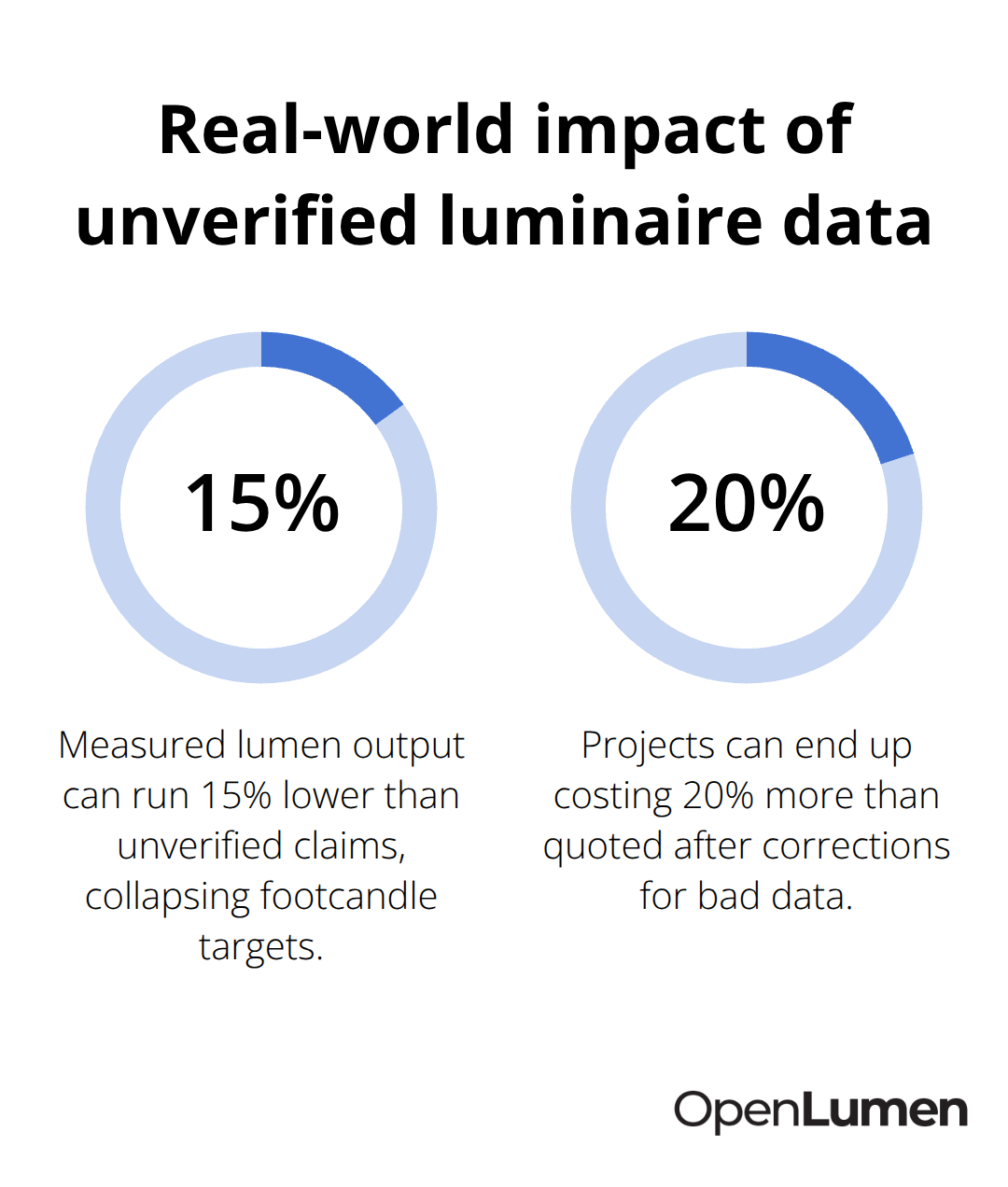
The study shows 50 footcandles across a loading dock, but after installation, you measure only 42 footcandles. Now you order additional fixtures, rework mounting heights, or explain to your client why the job costs 20% more than quoted. UL Solutions and CSA Group both emphasize that verified performance data prevents these costly revisions. Unverified color temperature specs force mid-project luminaire swaps or compromise on final lighting quality. The real cost isn’t just extra fixtures-it’s labor, scheduling delays, and damaged reputation.
Why Unverified Data Breaks Your Calculations
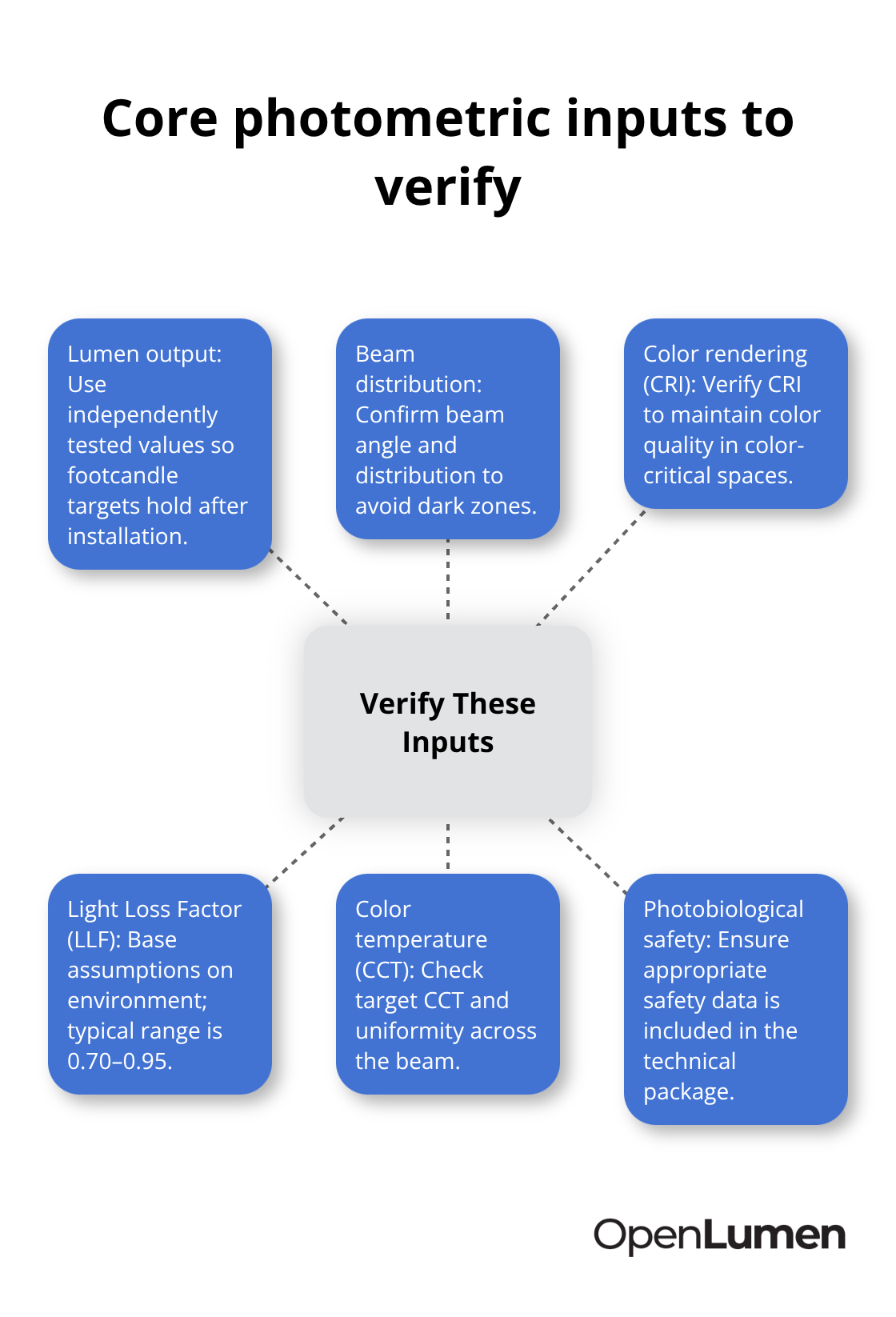
Photometric studies depend entirely on accurate inputs. If your IES file contains inflated beam angle data or overstated lumen output, your footcandle grid becomes fiction. A fixture that claims 90-degree beam spread but actually delivers 75 degrees creates dark zones your design never predicted. Color rendering index (CRI) claims without verification lead to color shifts that clients notice immediately. Light Loss Factor assumptions (typically 0.70–0.95) that ignore real-world dirt and aging produce optimistic predictions that fail within months. Each unverified specification compounds the next, turning a confident design into a liability.
Verified Data Eliminates Design Revisions
When you source luminaires through verified databases like the DLC SSL Qualified Products List or tools that provide independently tested photometric files, your calculations stick. A photometric study built on verified IES files and confirmed lumen output produces results you can trust on the first try. Tools like UL Product iQ and UL SPOT let you compare luminaires with substantiated performance data side by side, so you select fixtures that actually deliver the promised footcandles. The Heliyon research on industrial workplace illumination (December 2024) used DIALux simulation validated against real-world lux meter measurements, proving that verified data inputs produce reliable predictions. When your photometric study includes verified color rendering, verified beam distribution, and verified Light Loss Factor assumptions, clients see confidence in your work.
How Verified Data Protects Your Project Margin
Unverified luminaires introduce risk that eats into project margins through revisions, site visits, and expedited orders. Verified data is the fastest path to a first-time installation that meets specs. Third-party verification from organizations like UL Solutions and CSA Group adds credibility to your design recommendations and reduces the likelihood of post-installation disputes. A designer who specifies verified fixtures avoids the expensive cycle of callbacks and corrections. The investment in sourcing verified luminaire data pays back immediately through faster approvals, smoother installations, and clients who trust your specifications.
Moving Forward with Confidence
Verified luminaire data transforms how you approach every project. Once you establish a workflow that prioritizes verified specifications, you stop wasting time on design revisions and start building projects that perform as promised. The next section shows you exactly where to find this verified data and how to integrate it into your design process.
Where to Find Verified Luminaire Data
The fastest way to stop guessing about fixture performance is to build your specifications from verified sources from the start. The DLC SSL Qualified Products List contains the world’s largest database of independently tested commercial LED lighting products, and every fixture listed has passed rigorous third-party verification for lumen output, efficacy, color rendering, and beam distribution. When you specify from the DLC QPL, you work with data that utilities, energy programs, and regulatory bodies trust.
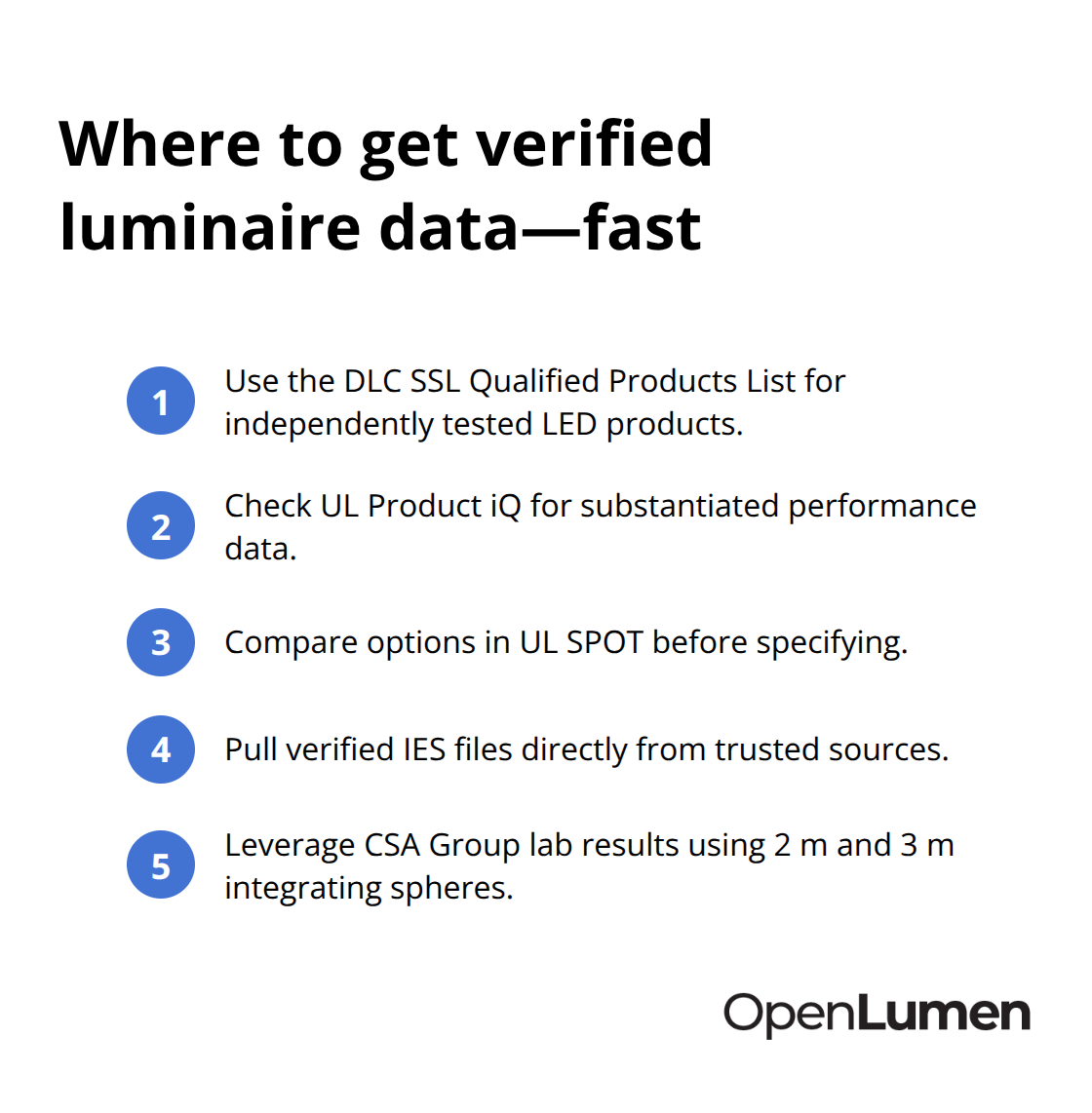
UL Product iQ and UL SPOT give you direct access to luminaires with substantiated performance claims, letting you compare fixtures side by side and pull verified photometric files instantly. CSA Group’s Irvine facility measures lumen output with 2-meter and 3-meter integrating spheres and produces IES files that reflect real-world performance, not manufacturer estimates.
Start with Verified Databases
These tools eliminate the guesswork that leads to design revisions and installation failures. Check whether your specified fixtures appear on the DLC QPL or in UL’s verified databases before you commit to a design. If a manufacturer cannot provide independently tested IES files or will not disclose third-party verification, that signals a red flag. Fixtures that lack verification history often carry hidden performance gaps that surface after installation. The investment in sourcing verified luminaire data pays back immediately through faster approvals and smoother installations.
Validate Photometric Inputs Against Real-World Performance
Validated photometric data changes how you approach the design itself. When you pull IES files from verified sources, your footcandle calculations reflect reality, not marketing claims. The Heliyon study on industrial workplace illumination (December 2024) validated DIALux simulations against real-world lux meter measurements and found that verified luminaire inputs produced predictions accurate enough to guide fixture selection and mounting height decisions.
This means you can trust your photometric study the first time without expensive post-installation corrections.
Cross-Reference Before Finalizing Specifications
Before you finalize any design, cross-reference your specified fixtures against the DLC QPL, UL SPOT, or equivalent verified databases in your region. Confirm that the luminaire schedule in your photometric study matches the exact catalog numbers and specifications of verified products. If your design relies on unverified color temperature claims, beam angle specs, or lumen output figures, you build on unstable ground. Verified data costs nothing extra and eliminates the most expensive mistakes in lighting design.
The next step involves understanding what verified data actually tells you about fixture performance and how to read photometric reports with confidence.
What Unverified Luminaire Data Actually Costs
Manufacturers publish performance claims without third-party testing all the time, and designers who build projects on these unverified figures discover the real costs only after installation. A fixture rated at 12,000 lumens by the maker might deliver 10,200 lumens when CSA Group or UL Solutions test it independently-a 15% gap that shrinks your footcandle calculations across an entire space. You won’t know this happened until your photometric study fails to match real-world measurements. The manufacturer’s beam angle specification might claim 60 degrees, but the actual beam spread measures 52 degrees, creating dark zones your isolines never predicted. Color temperature specs without verification lead to unexpected color shifts that clients notice immediately and blame on your design. Light Loss Factor assumptions that ignore dirt accumulation, aging, and environmental degradation produce overly optimistic predictions that deteriorate within six months. Each unverified specification compounds the others, turning a confident photometric study into a liability that costs you labor, scheduling delays, and client relationships.
Manufacturers Often Inflate What They Claim
Performance claims from manufacturers lack teeth without independent verification. A maker states 95 CRI when the actual color rendering index measures 88, affecting color-critical applications in retail or healthcare environments. Lumen output claims are particularly vulnerable to inflation because testing costs money and manufacturers know most designers won’t verify the numbers independently. When you specify from the DLC SSL Qualified Products List or pull IES files from UL Product iQ, every number has been tested by organizations like CSA Group using integrating spheres that measure actual light output, not estimates. Fixtures lacking verification history often carry hidden performance gaps. If a manufacturer resists providing independently tested IES files or won’t disclose third-party verification, that signals a red flag worth taking seriously-verified data costs nothing extra and eliminates expensive post-installation corrections.
Incomplete Technical Data Creates Installation Failures
Unverified specifications often omit critical details that surface during installation. A fixture’s color temperature might be listed as 4000K without disclosing that output varies across the beam, creating noticeable color shifts in the lit space. Beam distribution data might lack the angular resolution needed to produce accurate photometric files, forcing you to use generic NEMA classifications that misrepresent how light actually spreads. Mounting height assumptions buried in manufacturer docs differ from your actual installation, making all your footcandle predictions invalid. CSA Group’s Irvine facility produces complete IES files with verified lumen output, color rendering, beam distribution, and photobiological safety data precisely because incomplete specifications fail in the field. When you source luminaires through verified databases, you receive full technical packages that account for real-world variables (Light Loss Factor assumptions typically range from 0.70–0.95 depending on environment) and color uniformity across the beam. The Heliyon research on industrial workplace illumination validated DIALux simulations against measured lux data and confirmed that verified, complete technical specifications produce predictions accurate enough to guide fixture selection without expensive revisions.
Real-World Performance Gaps Multiply Across Projects
A single unverified fixture specification creates manageable problems. Ten unverified fixtures in one design compound the errors across your entire footcandle grid. A warehouse design that specifies 50 footcandles across the floor might deliver only 40 footcandles when unverified lumen output, beam angle, and Light Loss Factor assumptions all fall short of reality. You then order additional fixtures, rework mounting heights, or explain to your client why the job costs 20% more than quoted. UL Solutions and CSA Group both emphasize that verified performance data prevents these costly revisions. The investment in sourcing verified luminaire data pays back immediately through faster approvals and smoother installations. Designers who specify verified fixtures avoid the expensive cycle of callbacks and corrections that damage both margins and reputation.
Final Thoughts
Verified luminaire data usage transforms how you approach every project from the start. When you source fixtures from the DLC SSL Qualified Products List or pull independently tested IES files from UL Product iQ, you eliminate the design revisions, installation failures, and client disputes that drain your margins. CSA Group’s testing labs and UL Solutions have proven that third-party verification catches the performance gaps manufacturers won’t disclose, and the tools to find this data are now accessible and free.
The cost of building on unverified specifications is too high to ignore. A 15% shortfall in lumen output, an inflated beam angle, or unverified color rendering claims don’t matter until they fail in the field, and by then the cost is measured in labor, scheduling delays, and damaged reputation. The Heliyon research on industrial workplace illumination proved that verified luminaire inputs produce predictions accurate enough to guide fixture selection without expensive corrections.
Start with verified sources and validate your inputs before you commit to a design. OpenLumen provides a community-verified luminaires library and instant analysis metrics that let you confirm fixture performance and build with confidence from the beginning.
The information provided is for general educational purposes only and should not be considered professional engineering or lighting design advice. Always verify project requirements, local codes, and specifications with qualified professionals before making final decisions.